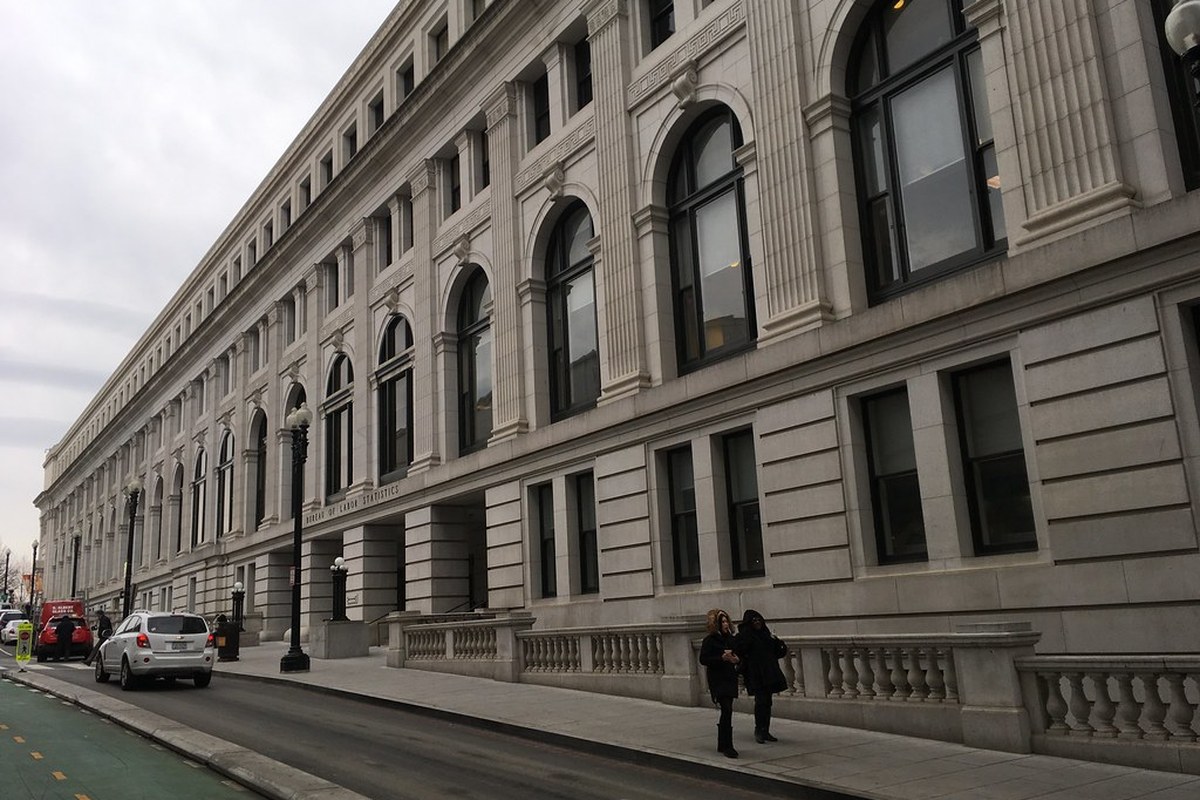
Photo: Erica Fischer. Source (Openverse). License: CC BY 2.0.
The October 2026 jobs report was released on schedule on Friday, November 6, at 8:30 a.m. EST: nonfarm payrolls rose 165,000, far above the roughly 65,000 consensus, and all 13 Kalshi KXPAYROLLS-26OCT contracts settled Yes with expiration value 165,000. Before considering any payrolls contract, three separate items still matter: the reference month, the trading cutoff, and the settlement terms. The October 1 source snapshot also recorded a Kalshi source-link inconsistency, re-checked after settlement below.
Source snapshot: October 1, 2026 (05:31-05:34 UTC); pre-release recheck October 20, 2026 (05:32-05:34 UTC); final contract check October 28, 2026 (05:36-05:40 UTC); post-release outcome check November 6, 2026 (16:13-16:19 UTC). This is a static schedule-and-verification guide, not a forecast or live prices page. The October 20 recheck re-read the BLS November schedule and the exact Kalshi event on both public API endpoints; what changed and what did not is recorded in the recheck section below.
The report came out on schedule. On Friday, November 6, 2026, at 8:30 a.m. EST (13:30 UTC), BLS reported that October nonfarm payrolls rose by 165,000, well above the roughly 65,000 consensus from economists polled by Reuters (estimates ranged from 35,000 to 125,000). The unemployment rate fell to 4.1% from 4.2%, and September’s gain was revised up to 60,000 from the previously reported 29,000 (Reuters report, November 6; corroborated the same day by dated Morningstar, Barron’s, and Stock Titan headlines). Direct BLS pages still refuse automated reads from this workstation with HTTP 403 (re-attempted November 6), so the result here rests on those named reports plus Kalshi’s own settlement value — which independently shows the same number.
On Kalshi, all 13 KXPAYROLLS-26OCT markets finalized with result Yes and expiration value 165,000, read on both public API endpoints on November 6, 2026 at 16:13 UTC and saved as dated evidence. Trading closed at the documented 8:29 a.m. EST (13:29 UTC), one minute before the release, exactly as observed on October 1 and unchanged through the final check. The recorded settlement timestamp is 2026-11-06T14:14:52Z (9:14:52 a.m. EST), inside the documented 10:00 a.m. EST expected-expiration window — which remained an expectation, not a payout guarantee. Because 165,000 is strictly above every listed rung from above −25,000 through above 125,000, every contract paid Yes: the published ladder was exhausted, not breached, and no higher threshold was listed.
Two boundaries stay honest. First, these Kalshi records are exchange settlement data, not a BLS certification, and neither the 13:29 close nor the 14:14:52Z settlement timestamp is a BLS publication time. Second, the series PPI link mismatch persists after settlement: the November 6 re-read of the KXPAYROLLS series metadata still names BLS while linking to the Producer Price Index news-release URL. Settlement proceeded against the event’s stated source — the BLS Monthly Employment Situation for October 2026 — so the mismatch did not block resolution, but it remains unexplained and worth raising with Kalshi. Post-finalization price fields are null, consistent with a settled market rather than a live quote.
A final pre-release contract check on October 28, 2026 (05:36–05:40 UTC), nine days before the scheduled release, re-read the exact Kalshi event through three paths: the direct event endpoint — which now returns a reorganized single-event payload with markets nested inside the event object — plus the series query on both public API endpoints. All three reads agree: KXPAYROLLS-26OCT still lists 13 markets, all 13 active, on the same threshold ladder from above −25,000 through above 125,000 with no cap. Every market still carries close time 2026-11-06T13:29:00Z (8:29 a.m. EST) and expected expiration 15:00 UTC (10:00 a.m. EST), and the strict “above” rule wording is unchanged: the lowest market still resolves Yes only if the increase is “above -25000 as reported by the Bureau of Labor Statistics Monthly Employment Situation Report for the month of October 2026.”
Dated last-traded prices in the October 28 snapshot, ordered from above −25,000 to above 125,000, were 94¢, 85¢, 79¢, 71¢, 66¢, 68¢, 59¢, 52¢, 52¢, 40¢, 33¢, 28¢, and 12¢. Two adjacent rungs — above 30,000 at 66¢ and above 40,000 at 68¢ — sit in non-monotonic order in this snapshot. That is recorded as observed structure, not an arbitrage claim, forecast, or recommendation; prices move.
The series PPI link mismatch persists: as of the October 28 read, the KXPAYROLLS series settlement source still names BLS while linking to the Producer Price Index news-release URL. The series also lists the next event, KXPAYROLLS-26NOV, on the same 13-threshold ladder with all markets active and the same 8:29 a.m. close pattern on December 4, 2026; that event belongs to the November payrolls guide.
BLS re-read blocked on October 28: automated re-read attempts of the BLS November schedule pages from this workstation were refused with HTTP 403, so the November 6, 8:30 a.m. ET release date carries its last verified read of October 20, when the page still showed a “Last Modified Date” of February 18, 2026. That is a dated verification gap, not a schedule change; re-check the official calendar before release day.
A pre-release recheck on October 20, 2026 (05:32–05:34 UTC) re-read the primary sources 17 days before the scheduled release. The BLS November schedule still lists the Employment Situation for October 2026 on Friday, November 6 at 8:30 a.m. ET, and the schedule page itself carries a “Last Modified Date” of February 18, 2026 — no change since publication. The release now sits inside a full macro week: JOLTS for September on Tuesday, November 3 (10:00 a.m.), Productivity and Costs for the third quarter on Thursday, November 5 (8:30 a.m.), the jobs report Friday, November 6 (8:30 a.m.), then the October CPI and Real Earnings on Tuesday, November 10 (8:30 a.m.).
On the Kalshi side, the exact event KXPAYROLLS-26OCT (“Jobs numbers in October 2026?”) was read on both public API endpoints, and both returned the same picture: 13 markets, all active, on the same threshold ladder observed October 1 — above −25,000, 0, 10,000, 20,000, 30,000, 40,000, 50,000, 60,000, 70,000, 80,000, 90,000, 100,000, and 125,000. Every market carried the same close time, 2026-11-06T13:29:00Z (8:29 a.m. EST), and the same expected expiration, 15:00 UTC (10:00 a.m. EST). The strict “above” rule wording is unchanged; the lowest-threshold market, for example, resolves Yes only if the increase is “above -25000 as reported by the Bureau of Labor Statistics Monthly Employment Situation Report for the month of October 2026.”
Last-traded prices in that dated snapshot, ordered from the above −25,000 contract to the above 125,000 contract, were 94¢, 85¢, 74¢, 71¢, 65¢, 61¢, 58¢, 53¢, 51¢, 42¢, 35¢, 28¢, and 13¢. These are recorded as dated observations of market structure, not forecasts, fair-value claims, or recommendations; prices move.
Two context facts changed since publication. First, the September reference-month report was released October 2: nonfarm payroll employment rose by 29,000 and the unemployment rate was 4.2 percent (BLS USDL-26-1549 result recheck). That is the completed prior month, not an October forecast. Second, federal funding runs through December 11, 2026 under Public Law 119-103, so unlike the October 2 release — which sat one day after the former October 1 funding deadline — the November 6 release has no adjacent funding cliff (December 11 funding checks).
The one open verification item is unchanged: the KXPAYROLLS series settlement source still names BLS while linking to the Producer Price Index news-release URL, exactly as recorded October 1. The checklist below stands.
Both BLS schedule views identify November 6 as the release date for October employment data. They are two views from the same official publisher, not independent confirmations. BLS calendars can change.
The report scheduled for October 2 covers September. The separate September payrolls verification guide addresses that release. October data follows on November 6.
The UTC offset also changes. October 2 uses EDT, making 8:30 a.m. Eastern equal to 12:30 UTC. November 6 uses EST, making the same local release time 13:30 UTC. Do not carry the summer offset forward.
Inflation has a different calendar: the October CPI release is scheduled for November 10, not November 6.
The exact event, KXPAYROLLS-26OCT, was titled “Jobs numbers in October 2026?” Its nested and separate market records showed 13 active threshold contracts on October 1, and the October 20 recheck and October 28 final check found the same 13 still active. Neither observation guarantees continuing availability.
For KXPAYROLLS-26OCT-T50000, the primary rule stated:
“If the increase in total non-farm payroll employment is above 50000 as reported by the Bureau of Labor Statistics Monthly Employment Situation Report for the month of October 2026, then the market resolves to Yes.”
BLS distinguishes payroll jobs from employed people. The establishment survey counts nonfarm wage-and-salary jobs, including two jobs held by one person separately. The household survey supplies employed-person and unemployment measures. These series are not interchangeable.
The PAYROLLS terms say: “Revisions to the Underlying made after Expiration will not be accounted for in determining the Expiration Value.” That is not equivalent to “first print always wins.”
The PDF also contains provisions for earlier expiration, a no-data fallback to the last available month by expiration, and market review. Consult the full terms rather than treating the short API description as exhaustive. The payrolls market mechanics guide provides broader background.
On October 1, the exact October event identified BLS as its settlement source and linked to the Employment Situation release. Its rules specified total nonfarm payroll employment.
However, the KXPAYROLLS series metadata labeled its source BLS while linking to a Producer Price Index endpoint. That is a genuine source-link inconsistency, not a reason to silently substitute one URL for another. The October 20 recheck and the October 28 final check found the series metadata unchanged: the settlement source still names BLS while linking to the PPI endpoint, so the mismatch had not been corrected as of the October 28 read.
This guide does not establish which API field legally controls or claim the discrepancy is resolved. Compare the event, series metadata, and full contract terms. Seek clarification from Kalshi if the inconsistency remains. A series-only source check is insufficient.
The Employment Situation URL is also a rolling page. Before November 6, its contents need not be October’s report.
This guide is educational, not financial, legal, or tax advice. Verify current rules and access requirements directly with Kalshi before acting.
October 1, 2026, 05:31-05:34 UTC. Direct sources behind this snapshot:
October 20, 2026, 05:32-05:34 UTC (pre-release recheck). Direct sources behind the recheck section:
October 28, 2026, 05:36-05:40 UTC (final contract check). Direct sources behind the final check section:
November 6, 2026, 16:13–16:19 UTC (post-release outcome check). Direct sources behind the result section:
It was released as scheduled on Friday, November 6, 2026, at 8:30 a.m. EST (13:30 UTC), covering October employment data. The report showed nonfarm payrolls up 165,000 — well above the roughly 65,000 consensus — with the unemployment rate down to 4.1%. The October 2 release covered September instead. Note that October 28 re-reads of the BLS schedule were refused with HTTP 403 from this workstation; the date’s last verified direct BLS read remained October 20, and the release itself was confirmed through dated named reports plus Kalshi settlement data.
Yes, and it did. All 13 contracts closed at 8:29 a.m. EST on November 6 (13:29 UTC), one minute before the scheduled BLS release, exactly as documented on October 1, October 20, and October 28. Kalshi recorded settlement at 9:14:52 a.m. EST (14:14:52 UTC), inside the 10:00 a.m. EST expected-expiration window. Close, settlement, and expected expiration are different milestones, and expected expiration never guaranteed payout timing.
The October 1 evidence shows that mismatch, and the October 20 and October 28 rechecks plus the November 6 post-settlement re-read found it still present: the series settlement source names BLS but links to the PPI endpoint, while the October event links to Employment Situation and specifies payroll employment. Settlement proceeded on the event’s stated source and was not blocked by the mismatch, but it remains unexplained. Compare the full terms and seek Kalshi clarification if the inconsistency remains unresolved.
No forecast was ever published here. The October 20 and October 28 snapshots recorded dated last-traded prices as structure only, not predictions. The settled outcome, reported November 6, was a gain of 165,000 — well above the roughly 65,000 consensus — and all 13 Kalshi markets paid Yes at expiration value 165,000. This guide documents the schedule, contract timing, and verification trail rather than predicting numbers.
Not financial advice. Prediction-market trading is speculative, and you can lose money. Do your own research.