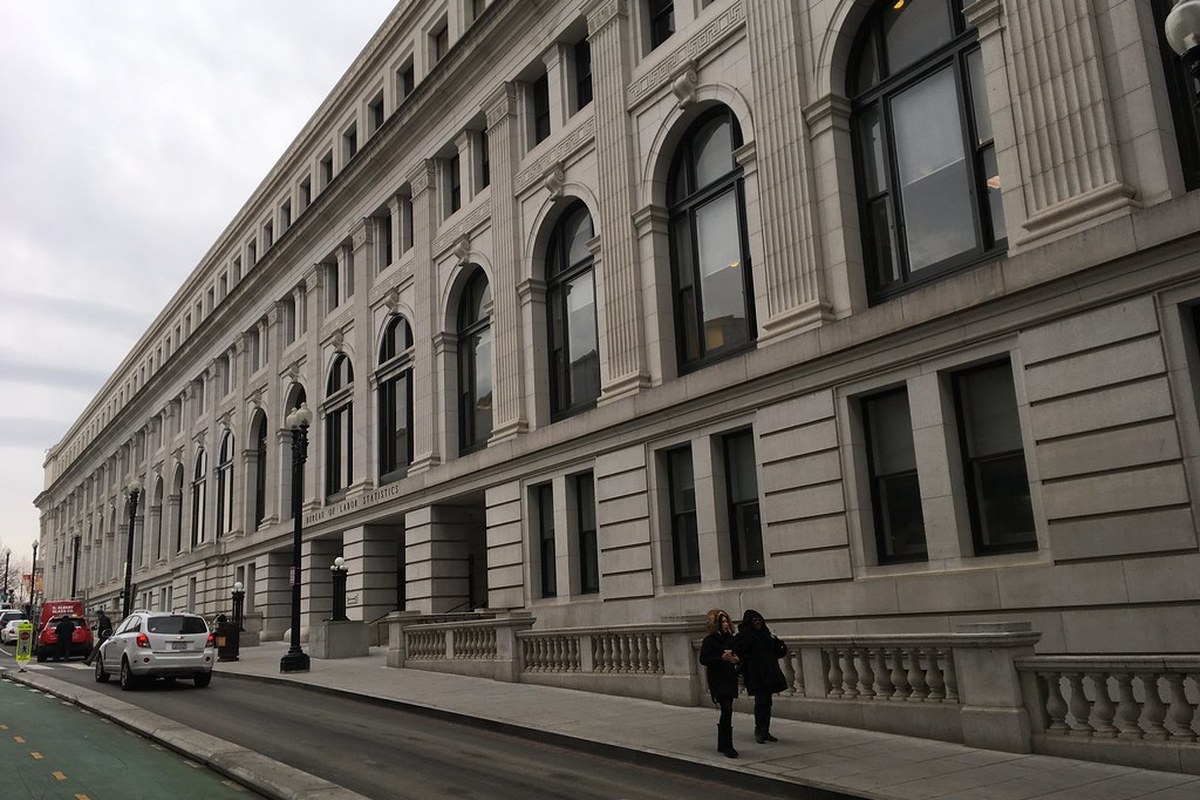
Photo: Erica Fischer. Source (Openverse). License: CC BY 2.0. Historical February 1, 2018 agency photograph, not a December 2026 release scene. Cropped and resized.
November 2026 payrolls are scheduled for release on Friday, December 4, 2026, at 8:30 a.m. EST (13:30 UTC). The report scheduled for publication in November covers October, not November. This static guide separates the BLS calendar from Kalshi's recorded trading cutoff and identifies a source-link mismatch that traders should check before relying on the contract terms.
Source snapshot: October 9, 2026 (05:31-05:36 UTC).
BLS December 2026 calendar; Employment Situation release schedule; BLS survey guide; exact November Kalshi event; payroll series metadata; and PAYROLLS contract terms. Both calendars are views from the same agency, not independent agency confirmations.
The official calendars distinguish three releases:
| Scheduled release (EST) | Report | Data month |
|---|---|---|
| November 6, 8:30 a.m. | Employment Situation | October 2026 |
| December 1, 10:00 a.m. | Job Openings and Labor Turnover Survey (JOLTS) | October 2026 |
| December 4, 8:30 a.m. | Employment Situation | November 2026 |
JOLTS openings should not be treated as a payroll forecast. Payrolls count jobs rather than employed people, and seasonal adjustment addresses recurring holiday patterns. A person with two payroll jobs can be counted twice.
The November CPI report is a different release, scheduled for December 10. Always match the publication date to the reference month and statistical measure.
At the snapshot, all 13 November contracts shared the same close and expected-expiration fields. These times refer to December 4, 2026, in EST, which is UTC-5:
| EST | UTC | Meaning and source |
|---|---|---|
| 8:29 a.m. | 13:29 | Trading close, exact November Kalshi contract fields. |
| 8:30 a.m. | 13:30 | Employment Situation publication, BLS calendar. |
| 10:00 a.m. | 15:00 | Expected expiration, Kalshi field; not a promised payout time. |
The BLS release time is a publisher schedule, separate from the exchange fields. The recorded contracts also allowed early closure. Recheck the BLS calendar and exact active contract directly on Kalshi; historical availability does not guarantee availability later.
The November market-list snapshot showed 13 active greater-than threshold contracts under KXPAYROLLS-26NOV. The event was marked mutually_exclusive=false: one reported increase can satisfy several nested thresholds. The listed strikes are contract boundaries, not an analyst forecast range.
For KXPAYROLLS-26NOV-T50000, the rule asks whether the increase in total nonfarm payroll employment for November 2026 is above 50,000. A hypothetical increase of exactly 50,000 would not satisfy that condition. This illustrates the wording, not an actual November result or a prediction.
For broader mechanics, see the payroll market guide.
The exact November event's settlement-source field named BLS and linked to its Employment Situation release. The series-level settlement-source field also named BLS, but its URL pointed to the Producer Price Index release. Those fields conflicted at the October 9 snapshot, while the November market wording identified payrolls.
Do not assume either field overrides the other. Compare the full exact terms and seek clarification from Kalshi if the mismatch remains.
The PAYROLLS terms state: "Revisions to the Underlying made after Expiration will not be accounted for in determining the Expiration Value." That does not establish that the first print always controls. BLS payroll estimates are revised twice before annual benchmarking.
If data is unavailable by expiration, the terms specify the last available month's data. Expiration can move earlier when data is released or the agency announces non-release, under Rule 7.2. The terms state settlement no later than the day after expiration unless review applies, and include further outcome-review and payout-determination contingencies. Expected expiration is not a guaranteed payout time. The PDF also labels its instructions for locating the headline value as convenience guidance, not binding terms.
BLS schedules the Employment Situation for November 2026 for Friday, December 4, 2026, at 8:30 a.m. EST, or 13:30 UTC. This is the November reference month's report. The schedule can change, so check the official BLS calendar again before relying on that release time.
The phrase can refer to the month of publication rather than the month measured. The Employment Situation scheduled for November 6, 2026, covers October data. November data is scheduled for December 4. December 1 JOLTS is another separate release and also covers October, not November payrolls.
At the October 9 snapshot, the November payroll contracts showed an 8:29 a.m. EST close on December 4, one minute before the scheduled BLS release. Expected expiration was 10:00 a.m. EST. Those fields do not promise current availability or immediate payout; check the exact active contract and full rules on Kalshi.
No. The cited PAYROLLS terms say revisions made after expiration are excluded; they do not establish a universal first-print rule. The terms also address unavailable data and review contingencies. Traders should check the exact contract's expiration and settlement language, and seek clarification if the event and series source fields still conflict.
Not financial advice. Prediction-market trading is speculative, and you can lose money. Do your own research.