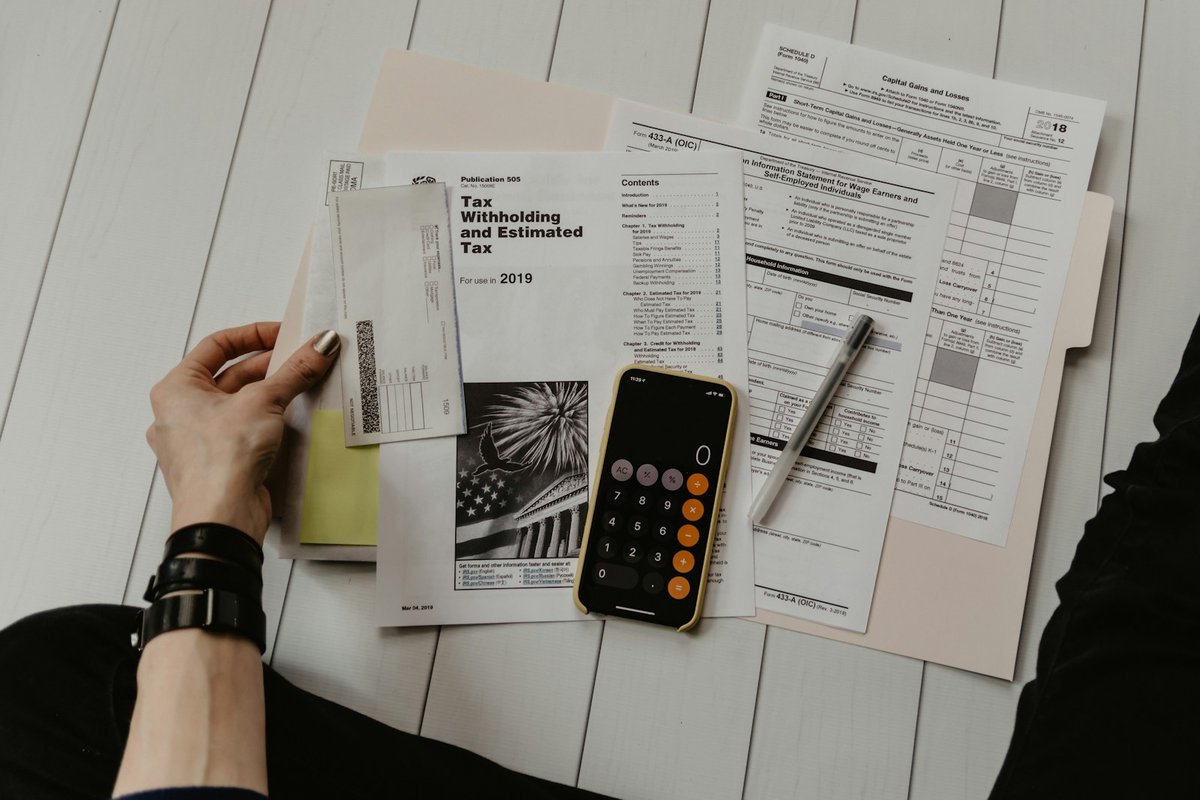
An active year of Kalshi trading can produce a long paper trail: Fed decisions, CPI prints, election contracts, and weather markets all summarized in your account's PnL statement. If you traded on Kalshi and you're wondering how to report those winnings and losses on your tax return, this guide walks through the forms, the Section 1256 questions, and the records worth keeping. It is educational information, not tax advice — get a tax professional if your situation is complicated.
Kalshi is regulated by the CFTC as a designated contract market. That matters for taxes because it means your trades are happening on a legitimate U.S. exchange, not some offshore book. You'll get actual tax documents. You can't hide this stuff, and you shouldn't try to.
Because Kalshi is a regulated exchange, your contracts are treated as derivatives for tax purposes. This puts them in a different bucket than, say, sports betting winnings or crypto gambling on unregulated platforms. The IRS has clearer (though still imperfect) guidance on how to handle these.
Kalshi's Help Center (checked September 25, 2026) lists the 1099 forms it issues: a 1099-INT for interest payments, a 1099-MISC for credits and rewards, a 1099-B for crypto transfers, and a 1099-DA for ZeroHash digital-asset reporting. Event-contract trading itself is not reported on a 1099-B. Instead, your trading activity, including profits, losses, and fees, is summarized in the PnL statement you can download from the Account tab under Tax Info.
If you made more than a handful of trades, expect a long statement. A common approach is downloading it and reconciling it against your own records before filing.
Here's where it gets interesting. Kalshi contracts may qualify as Section 1256 contracts under IRS rules. Section 1256 applies to regulated futures contracts and certain options. The tax treatment is favorable:
This applies regardless of how long you held the position. So even if you bought a Federal Reserve interest-rate decision contract around a scheduled FOMC meeting at 9:00 AM and it settled at 2:00 PM, you still get the 60/40 split.
The catch: not everyone agrees that all Kalshi contracts clearly qualify. The IRS hasn't issued specific guidance on event contracts from prediction markets. Many tax professionals treat Kalshi contracts as Section 1256 based on the CFTC regulation, but this is an evolving area. Document your reasoning and keep records in case of audit.
If you're treating your Kalshi trades as Section 1256 contracts, you'll use Form 6781 (Gains and Losses from Section 1256 Contracts and Straddles). You report your net gain or loss, and the form automatically splits it 60/40. That number then flows to Schedule D.
If you or your accountant decide not to treat these as Section 1256 contracts, you'd report each transaction as a standard capital gain or loss on Schedule D and Form 8949. Short-term positions (held under a year) get taxed at ordinary income rates. Long-term positions get the lower capital gains rate.
For most prediction market traders, this is worse. Holding periods are usually hours or days, not years. The 60/40 treatment is almost always more favorable.
The IRS expects you to substantiate your reported gains and losses. A practical approach is a spreadsheet with every trade made on Kalshi, including:
This kind of log answers questions about a CPI contract traded months earlier. The Kalshi platform keeps transaction history, but no platform should be relied on to maintain records forever. Export your data regularly.
To compare notes with other traders on how they handle tax reporting, the Kalshi View Telegram channel shares occasional threads. It's not tax advice, just traders sharing what works.
One upside of proper tax reporting: your Kalshi losses reduce your taxable gains. If you lost money on an election contract but made money on Fed decisions, they net out. You're only taxed on the difference.
If your total losses exceed your gains, you can deduct up to $3,000 against ordinary income per year. Excess losses carry forward to future years. This is standard capital loss treatment and applies whether you use Section 1256 or not.
Yes. There's no minimum threshold for reporting. Even if no 1099 form applies to your contract trading (Kalshi's 1099-B covers crypto transfers, and trading activity lives in the PnL statement), you're legally required to report all taxable income. The IRS doesn't care if you made $50 or $5,000. Report it accurately and you won't have problems later.
In theory, yes. If you have losing positions, you can close them to realize losses that offset gains elsewhere. However, wash sale rules may apply if you re-enter a substantially identical position within 30 days. This gets complicated with event contracts since many are unique. Ask a tax professional if you're planning a specific strategy.
On Kalshi, event-contract trading is summarized in your account PnL statement, and its 1099 forms cover interest, credits and rewards, crypto transfers, and ZeroHash digital-asset reporting. Offshore platforms like Polymarket don't provide US tax forms at all. You're still legally required to report Polymarket gains, but you'll need to calculate and document them yourself. Keep your own records and report honestly. The IRS treats unreported foreign income seriously.
If your trading activity is significant, yes. Most general accountants haven't seen Kalshi's PnL statement or its 1099 forms before and may not know about Section 1256 treatment. Look for someone experienced with futures, options, or derivatives. The fee is worth it if it saves you from errors or missed deductions. First-year reporting mistakes are common and avoidable.
Primary sources I checked: IRS Publication 550 (Section 1256 categories and the 60/40 split), the CFTC KalshiEX designation (Kalshi's DCM status), and Kalshi's tax documentation note (forms Kalshi says it provides); verified August 24, 2026.
Not financial advice. This site provides educational information only. Trading involves risk, and you can lose money. Verify current market rules and do your own research.